Presence Without Permission: How the Next Smart Home Learns You Without Asking
The smart home of popular imagination required participation. You spoke a wake word. You tapped an app. You told the system what you wanted, and it obliged. That model, already aging, is giving way to something considerably more sophisticated—and considerably more consequential. The next generation of residential computing does not wait to be addressed. It watches, infers, and acts. The question of who benefits from that capability, and at whose expense, is becoming one of the defining privacy debates of the decade.
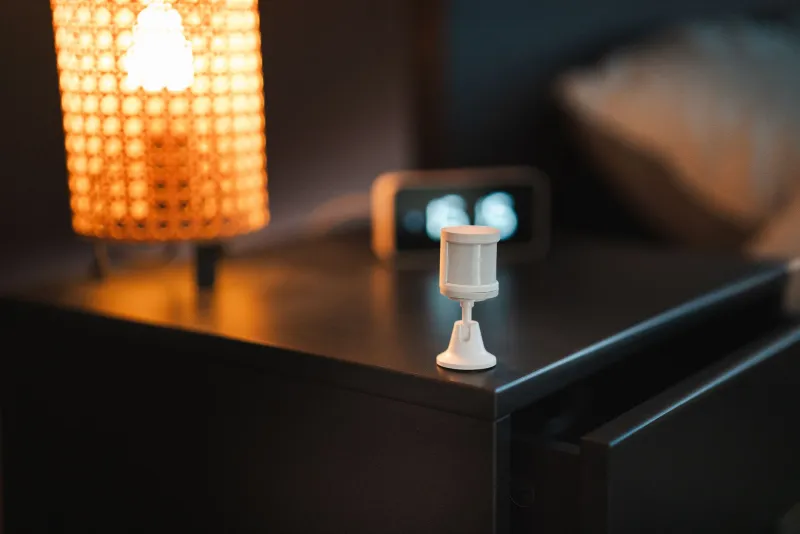
Ambient computing—the design philosophy that embeds intelligence into physical environments rather than discrete devices—has been a theoretical ambition in technology circles since Mark Weiser articulated the concept at Xerox PARC in the early 1990s. What has changed is the convergence of affordable sensor hardware, edge computing capacity, and large-scale machine learning models capable of deriving behavioral insight from non-obvious data streams. Thermal imaging arrays can now infer occupancy, sleep posture, and respiratory rate without a camera lens in sight. Millimeter-wave radar embedded in a wall outlet can detect falls, count household members, and map movement patterns through solid surfaces. Acoustic sensors calibrated to sub-audible frequencies can distinguish between a refrigerator opening and a medicine cabinet.
None of these capabilities require a screen. None of them require a spoken command. And most of them are arriving in American homes with privacy disclosures that were written for a simpler era.
The Architecture of Invisible Sensing
Understanding what is technically at stake requires moving past the surface vocabulary of smart home marketing. Contemporary ambient systems do not merely collect data—they construct behavioral models. A single mmWave radar device, positioned correctly, can generate a continuous occupancy graph that reveals sleep schedules, daily routines, exercise habits, and social patterns. Aggregated across weeks, that data profile is more revealing than a detailed diary.
The commercial opportunity embedded in that profile is not hypothetical. Behavioral data derived from residential environments commands significant premiums in insurance underwriting, targeted advertising, and consumer finance markets. The incentive structure facing device manufacturers is therefore not neutral. A company that sells a $79 smart sensor and recovers that cost—and then some—through downstream data licensing is not primarily in the hardware business. It is in the surveillance business with a hardware acquisition channel.
This dynamic is not unique to ambient computing; it is the foundational business model of the consumer internet applied to physical space. What distinguishes the ambient home context is the intimacy and volume of the signal. Digital behavior can be compartmentalized. Physical behavior in one's own residence cannot.
Big Tech's Structural Advantage and Its Limits
Amazon, Google, and Apple have each made substantial investments in smart home ecosystems, and each brings a different philosophy to the privacy question—though the differences are more of degree than of kind. Amazon's Alexa infrastructure has faced repeated scrutiny over audio retention practices and third-party skill data sharing. Google's Home platform operates within an advertising ecosystem that creates structural pressure toward data monetization. Apple's HomeKit architecture emphasizes on-device processing and has staked a meaningful brand position on privacy, though independent security researchers have identified gaps between the company's stated policies and implementation details.
What all three share is scale—and the leverage that comes with it. Their ecosystems define default consumer expectations, shape the standards bodies that govern interoperability protocols, and possess distribution advantages that independent developers cannot easily overcome. The Matter standard, developed under the Connectivity Standards Alliance with participation from all three companies, represents a genuine step toward interoperability but does not resolve the underlying privacy architecture questions that ambient computing raises.
The Privacy-First Insurgency
Into the space created by consumer distrust of incumbent platforms, a cohort of startups is constructing an alternative value proposition. The argument is straightforward: if the data generated inside your home is genuinely valuable, then keeping it inside your home—on local hardware, processed without cloud transmission—should be worth paying for.
Companies such as Plume Design, which offers AI-driven home networking with on-premises data processing, and Lighthouse AI (before its acquisition), which built person-detection systems that stored all inference locally, represent an early wave of this approach. More recent entrants are pushing further, building ambient sensing systems on federated learning architectures that improve model performance across a user base without any individual household's data leaving its local network.
The commercial viability of this model remains unproven at scale. Privacy-first positioning resonates strongly with a specific demographic—technically literate, higher-income homeowners with strong data sovereignty preferences—but the mass market has historically demonstrated a willingness to exchange privacy for convenience at favorable terms. The question is whether the ambient computing context, with its more visceral implications for residential surveillance, shifts that calculus.
Early signals suggest it might. A 2024 survey conducted by the Future of Privacy Forum found that 67 percent of American adults expressed discomfort with devices that infer behavioral patterns without explicit activation—a significantly higher discomfort threshold than the same respondents reported for conventional smart speakers. Ambient sensing, it appears, crosses a psychological line that always-on microphones do not.
Where Regulation Is Falling Behind
The federal regulatory landscape for residential ambient computing is, at present, largely aspirational. The FTC has authority over deceptive trade practices and has issued guidance on connected device security, but comprehensive federal privacy legislation covering the full range of ambient sensing applications has not materialized despite years of congressional deliberation. The American Data Privacy and Protection Act, which advanced further than any prior federal privacy bill, stalled before reaching a floor vote.
State-level frameworks fill some gaps. California's Consumer Privacy Act and its subsequent amendment provide residents with meaningful rights over data collected by covered businesses, and several other states have enacted comparable legislation. But these frameworks were designed around identifiable personal data in commercial contexts. They are poorly suited to the technical realities of ambient sensing, where the most sensitive inferences are derived from aggregate behavioral patterns rather than explicitly personal identifiers.
The Federal Communications Commission and the Department of Commerce have each signaled interest in addressing connected device security and data practices, but agency rulemaking timelines are measured in years, and the technology is evolving in months.
Navigating the Conflicted Home
For homeowners attempting to navigate these dynamics today, the practical guidance is limited but not absent. Prioritizing devices that process data locally and provide verifiable evidence of that architecture—rather than relying solely on manufacturer claims—is a meaningful starting point. Reviewing data sharing provisions in device terms of service, with particular attention to downstream licensing language, reveals practices that marketing materials consistently obscure. And treating smart home ecosystems as infrastructure decisions rather than appliance purchases—with corresponding attention to long-term vendor trustworthiness—reflects the actual stakes involved.
For the technology industry, the ambient home represents both an enormous market opportunity and a genuine test of whether privacy can function as a durable competitive differentiator rather than a compliance checkbox. The companies that build trust into the physical layer of the connected home—not as a feature toggle but as a foundational architectural commitment—are positioning themselves for a future in which consumer patience with residential surveillance has reached its limit.
That limit may arrive sooner than the incumbents expect.